

225mm Sanding Discs for Drywall Sanders: Complete Guide
Learn how to choose the right 225mm sanding discs for drywall, joint compound, plaster and large-surface preparation — including grit selection, abrasive types, hole patterns, dust extraction and sanding technique.
If you have ever sanded a large drywall project by hand, you already know how quickly the job can become tiring. Ceilings, long walls, joint compound and plaster can require hours of repetitive sanding, especially when you are trying to achieve a surface smooth enough for primer and paint.
That is where 225mm sanding discs for drywall sanders make a noticeable difference.
A 225mm disc has a much larger sanding surface than the smaller discs commonly used on orbital sanders. When paired with a long-reach drywall sander, it allows you to cover more area with every pass while maintaining a relatively even sanding pattern.
But choosing the right 225mm disc is about more than diameter. Grit, abrasive material, hole pattern, backing, dust extraction and the condition of the drywall all affect the final result.
This guide explains what you need to know before choosing and using 225mm sanding discs for drywall sanding.
What Are 225mm Sanding Discs?
A 225mm sanding disc is a large circular abrasive disc designed for use with compatible drywall and long-reach sanders. The 225mm size is approximately 9 inches in diameter, making it particularly suitable for sanding large walls and ceilings.
Unlike hand sanding sheets, a 225mm disc is attached directly to the sanding head of a power drywall sander. Most models use a hook-and-loop backing, allowing the abrasive disc to be installed and replaced quickly.
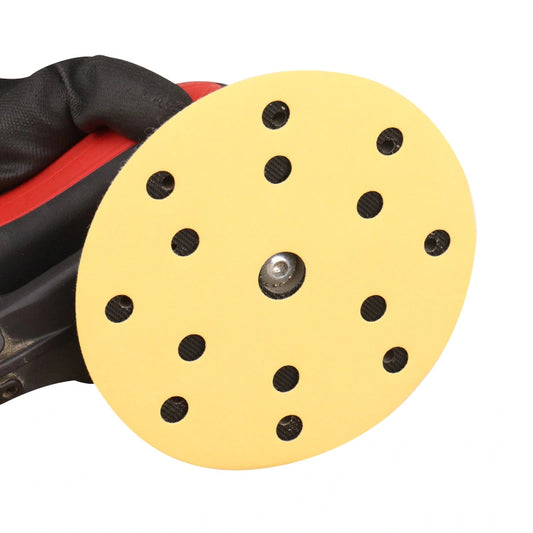
The larger diameter provides greater surface coverage, while perforated or multi-hole designs allow sanding dust to be pulled through the disc when the sander is connected to a suitable vacuum system.
Why Use 225mm Sanding Discs for Drywall?
The biggest advantage is simple: you can cover more surface with fewer passes.
When sanding a large room, using a small sanding disc means constantly moving back and forth over the same area. A 225mm disc gives you a wider sanding footprint, which makes it particularly useful for:
Large Walls
Cover broad drywall surfaces more efficiently with a larger sanding footprint.
Ceilings
Pair a 225mm disc with a long-reach drywall sander to reduce unnecessary ladder work.
Joint Compound
Smooth seams, ridges and excess joint compound across larger areas.
Renovation Projects
A practical choice when sanding multiple rooms or other large surfaces.
A long-reach drywall sander also lets you work on ceilings and high walls without constantly using a ladder.
For large-area sanding, a 225mm disc can provide greater coverage per pass and help improve overall sanding efficiency.
The Real Benefit Isn't Simply "Sanding Faster"
A larger disc can also help produce a more consistent result.
Instead of concentrating pressure on a small area, the sanding head distributes contact across a larger surface. When you combine this with a steady sanding motion and appropriate pressure, it becomes easier to blend joint compound and smooth large areas evenly.
225mm Sanding Disc Grit Guide
Choosing the correct grit is one of the most important parts of drywall sanding.
You don't want to use an aggressive grit when the wall only needs light finishing. At the same time, using an excessively fine grit for major joint-compound leveling can make the job unnecessarily slow.
| Grit | Typical Application |
|---|---|
| P60–P80 | Heavy material removal and rough leveling |
| P120 | Initial drywall and joint-compound sanding |
| P150–P180 | General smoothing and blending |
| P220–P240 | Fine finishing before painting |
| P320–P400 | Very fine finishing or primer sanding |
FastPlus' 225mm ceramic and gold discs are available across a broad grit range, including P60 through P400 depending on the product.
Ceramic vs. Aluminum Oxide: Which 225mm Disc Should You Choose?
Not every 225mm sanding disc uses the same abrasive grain.
Two useful options for drywall and general surface preparation are ceramic alumina and aluminum oxide.
Ceramic 225mm Sanding Discs
 Ceramic abrasives are designed for fast cutting and durability.
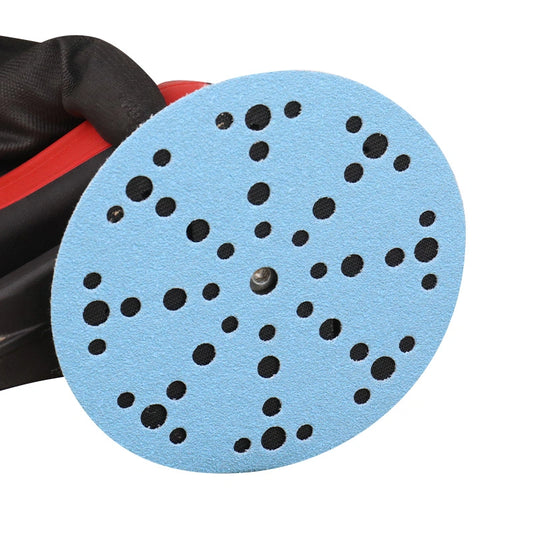
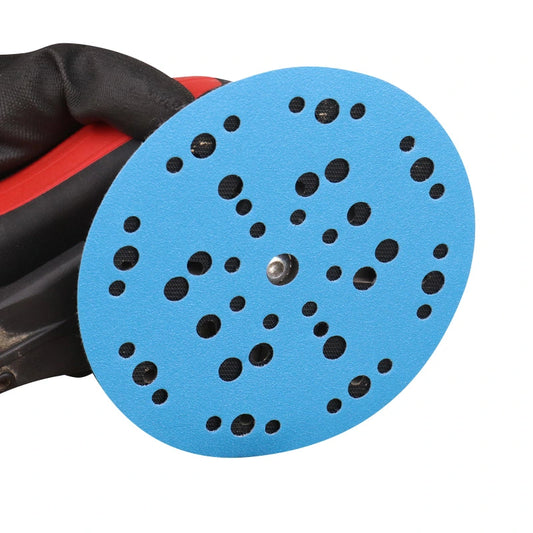
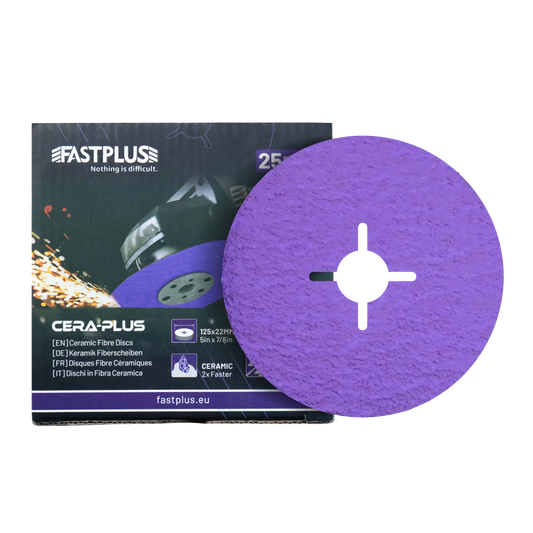
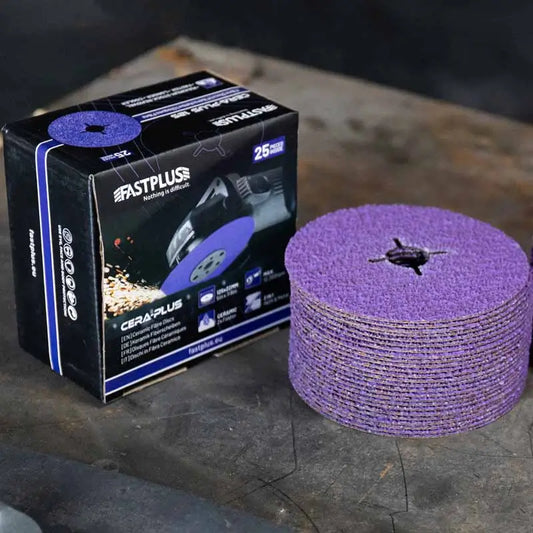
FastPlus' F65 225mm Ceramic Multi-Hole discs use ceramic alumina minerals, a semi-open coating and a 129-hole perforation pattern. They are designed for drywall, plaster, wood and floor surface preparation.
Ceramic discs are a good choice when:
- You have a large area to sand
- You want faster material removal
- You are working on tougher surfaces
- You want longer abrasive life
- You are sanding frequently
For contractors working on multiple rooms or renovation projects, the additional cutting performance can make a meaningful difference.
Aluminum Oxide 225mm Sanding Discs

Aluminum oxide is a versatile abrasive commonly used for general-purpose sanding.
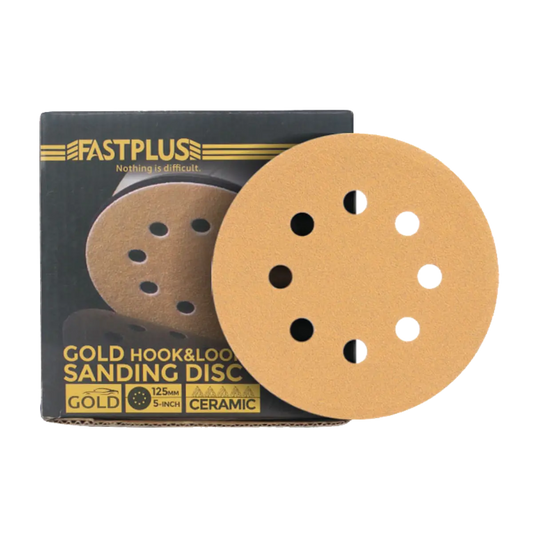
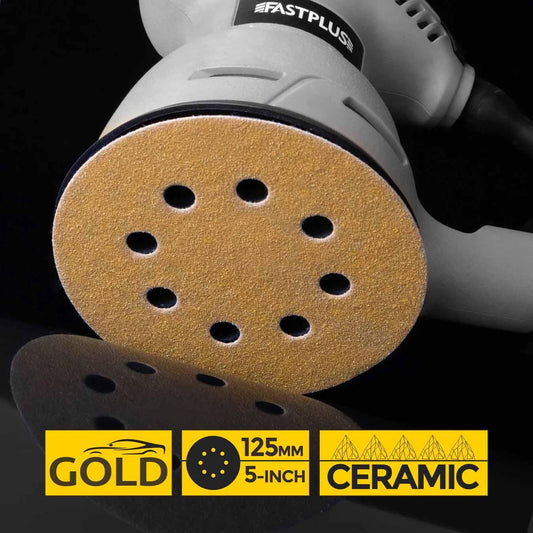
FastPlus' B15 Gold 225mm discs use aluminum oxide minerals and an open-coat construction designed to reduce clogging when sanding drywall, plaster, wood and other softer materials.
They are a practical choice for:
- General drywall sanding
- DIY renovation
- Joint-compound smoothing
- Wood and surface preparation
- Projects where versatility and value are important
Why Hole Pattern Matters
If you've ever sanded drywall without proper dust extraction, you know how quickly the air can become filled with fine white dust.
That's why the hole pattern on a sanding disc matters.
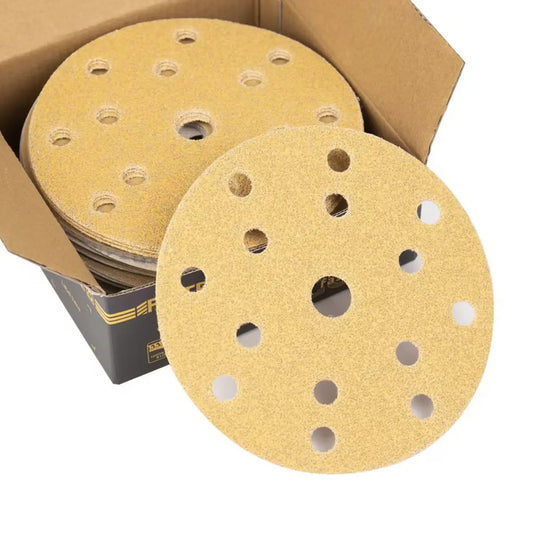
Perforations allow dust to pass through the abrasive surface and into the vacuum system. This can help keep the abrasive cleaner and improve the working environment.
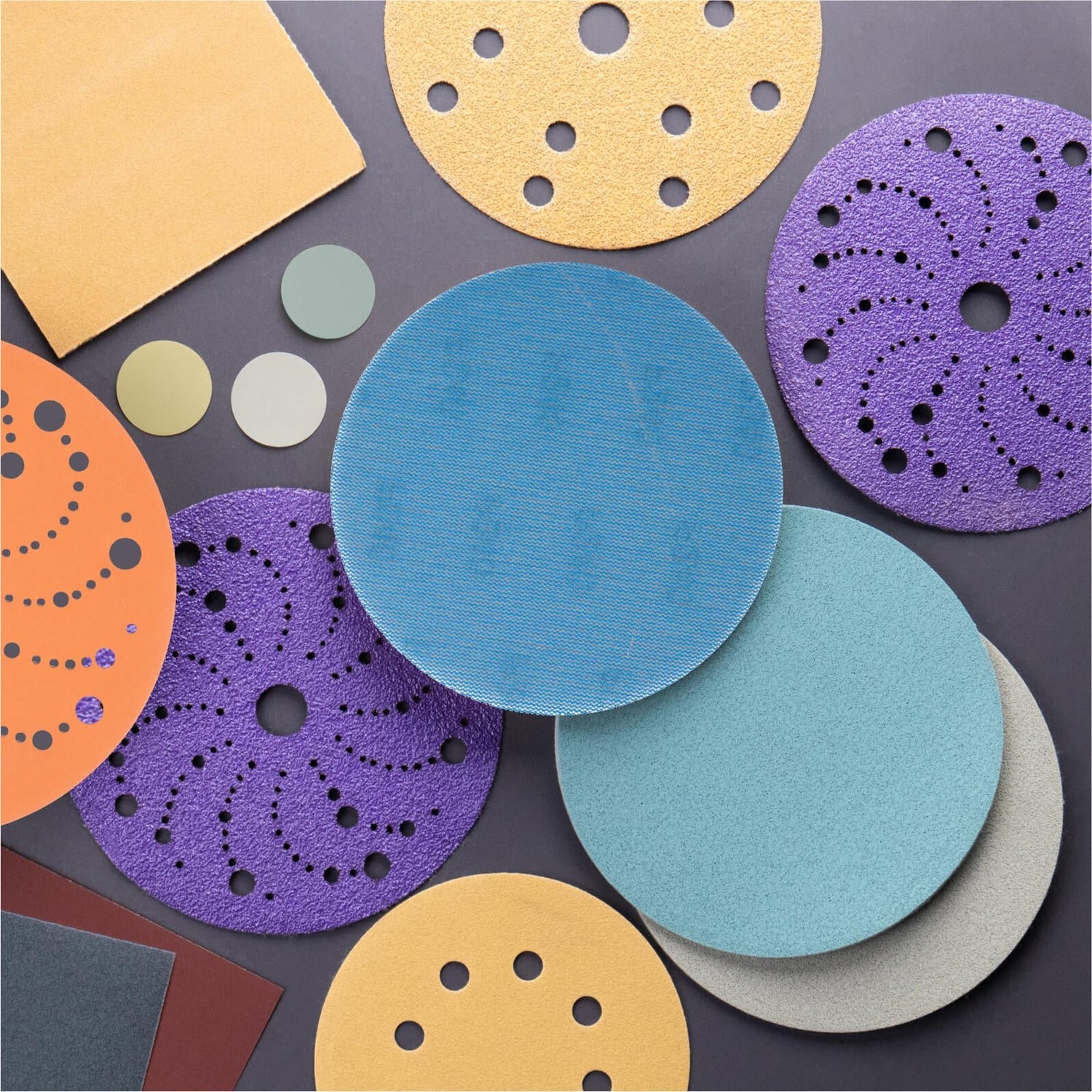
225mm Ceramic Multi-Hole
The F65 Ceramic disc uses a 129-hole pattern designed for efficient dust extraction.
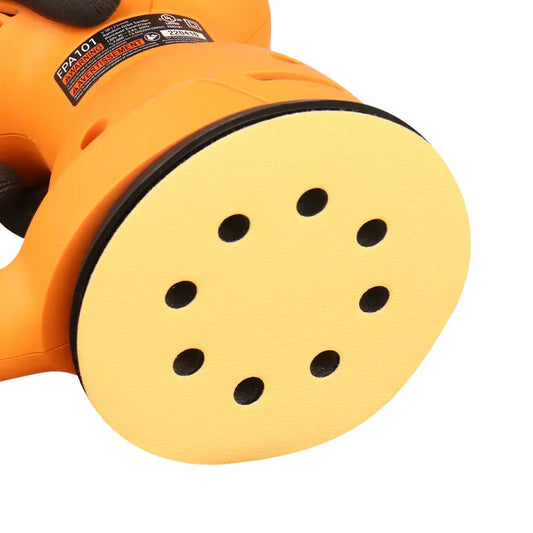
225mm Gold 8+1 Hole
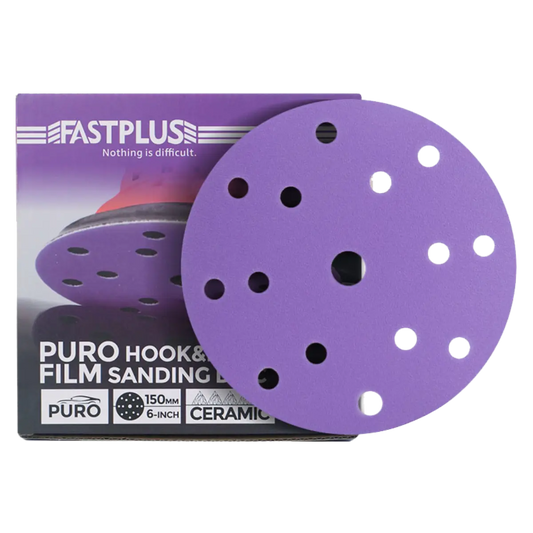
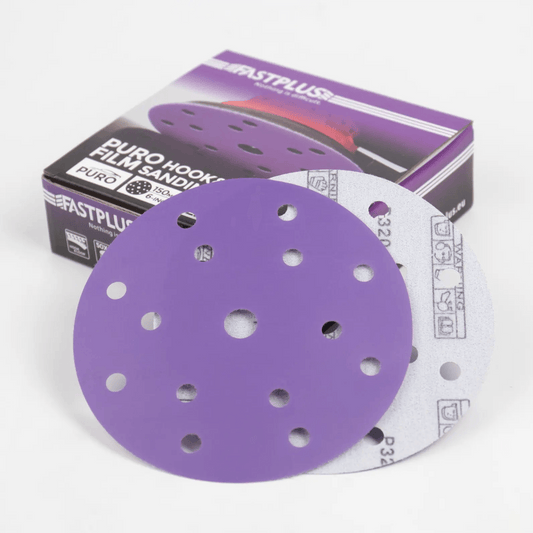
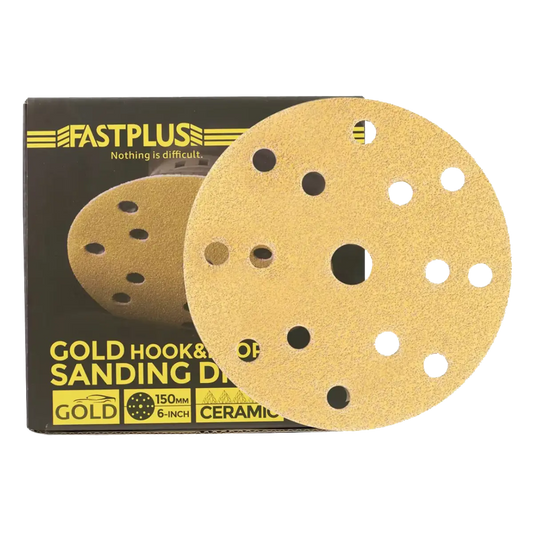
The B15 Gold disc uses an 8+1-hole pattern and an open-coat abrasive construction.
How to Choose the Right 225mm Sanding Disc
Instead of choosing based only on price, consider these five factors.
Check the Diameter
First, make sure your machine accepts 225mm / 9-inch discs. A 225mm disc is designed for compatible drywall and long-reach sanders.
Check the Attachment
Most professional drywall sanding discs use hook-and-loop backing. This allows you to remove a worn disc quickly and attach a new one without complicated tools.
Match the Hole Pattern
Don't assume every 225mm disc has the same perforation pattern. Check whether your machine uses a multi-hole, 8+1-hole or another configuration.
Choose the Grit Based on the Surface
Don't automatically choose the coarsest grit. A practical progression can be heavy leveling → P80/P120 → P150/P180 → P220/P240.
Consider Dust Extraction
For drywall sanding, dust management is especially important. A compatible vacuum system combined with a perforated sanding disc can remove dust directly from the sanding area.
How to Use a 225mm Sanding Disc on Drywall

Once you have the right disc, your technique matters just as much.
Make Sure the Joint Compound Is Completely Dry
Never rush this step. Sanding partially wet joint compound can clog the abrasive and create an uneven surface.
Inspect the Wall
Look for:
- Raised joint-compound edges
- Uneven seams
- Screw or nail depressions
- High spots
- Patch repairs
- Visible ridges
You can use a pencil to lightly mark areas that need additional attention.
Start With the Appropriate Grit
For general drywall sanding, P120–P180 is often a practical starting range. Use a coarser grit only when substantial leveling is necessary.
Connect Your Vacuum
Attach the drywall sander to a suitable dust-extraction system before sanding. This helps reduce airborne dust and keeps the abrasive working more effectively.
Let the Sander Glide
One of the most common mistakes is pushing too hard. A drywall sander should generally glide over the surface rather than being forced into it.
Excessive pressure can:
- Create depressions
- Remove too much joint compound
- Increase clogging
- Wear the abrasive prematurely
- Produce uneven sanding
Keep the sanding head moving at a controlled, consistent pace.
Move in Overlapping Passes
Work systematically across the wall. Avoid spending too much time in one small spot. Instead, use overlapping passes to create a consistent finish.
Change to a Finer Grit
Once the surface is level, move to a finer abrasive. For example: P120 → P180 → P240.
The goal is not simply to remove material. It's to progressively refine the scratch pattern until the wall is ready for primer.
Common Mistakes When Using 225mm Drywall Sanding Discs
Even a high-quality abrasive won't compensate for poor technique.
This is probably the most common mistake. Let the abrasive do the cutting.
A coarse abrasive may remove material quickly, but it can also create deep scratches that take additional sanding to remove.
This loads the abrasive and can produce an uneven surface.
Fine drywall dust can quickly fill the abrasive surface and reduce sanding performance.
A disc that doesn't align correctly with the sanding pad may not provide effective dust extraction.
This can create low spots in soft joint compound. Keep the sanding head moving.
225mm Sanding Discs vs. Smaller Sanding Discs
So, when should you use a 225mm disc instead of a 125mm or 150mm disc?
For large walls and ceilings, 225mm is usually the more logical choice because the larger diameter provides greater coverage per pass.
| Disc Size | Best For |
|---|---|
| 125mm | Small areas, detailed sanding and compact repair work |
| 150mm | General-purpose orbital sanding, medium-sized surfaces and finishing |
| 225mm | Large walls, ceilings, drywall, plaster and large-area renovation |
Smaller discs are more convenient when you need:
- Detailed sanding
- Small repairs
- Tight areas
- Corners
- Spot repairs
FastPlus offers 125mm, 150mm and 225mm sanding formats, allowing you to choose the size based on the job rather than trying to use one abrasive for everything.
How Long Should a 225mm Sanding Disc Last?
There isn't one universal answer.
Disc life depends on:
A quality abrasive can last considerably longer when used correctly.
If a disc suddenly stops cutting effectively, don't immediately assume the abrasive is defective. Check whether it is loaded with dust, whether the vacuum is working correctly, and whether excessive pressure has flattened the abrasive cutting edges.
FastPlus 225mm Sanding Discs for Drywall Sanders
For drywall and large-surface sanding, FastPlus offers two particularly useful 225mm options.
F65 225mm Ceramic Multi-Hole
The F65 Blue Ceramic Multi-Hole disc uses ceramic alumina, a semi-open coat and 129-hole perforation.
It is available from P60 to P400 and is designed for drywall, plaster, wood and floor preparation.
The multi-hole design is particularly useful when dust extraction is an important part of your sanding setup.
B15 225mm Gold 8+1 Hole
The B15 Gold uses aluminum oxide with an open-coat construction and an 8+1-hole design.
It is available from P40 to P400 and is suited to drywall, plaster, wood and floor sanding.
Its versatile grit range makes it suitable for both more aggressive preparation and finer finishing work.
Ready for Faster, More Consistent Drywall Sanding?
Choose the right 225mm sanding disc for your drywall sander, match the grit to the surface, and combine it with effective dust extraction for a cleaner, more efficient sanding process.
Final Thoughts
A good drywall finish starts long before the paint goes on. If the surface underneath is uneven, scratched or poorly blended, even expensive paint won't completely hide the problem.
A 225mm sanding disc for drywall sanders gives you a practical way to work faster across large walls and ceilings while maintaining consistent sanding coverage.
The key is choosing the right combination of disc size, abrasive type, grit, hole pattern and dust extraction.
For general drywall work, start with an appropriate medium grit such as P120–P180, use light and consistent pressure, keep the sanding head moving, and progress to finer grits as the surface becomes smoother.
For larger renovation jobs, a high-performance ceramic 225mm disc can provide faster cutting and longer abrasive life. For everyday drywall and general-purpose sanding, an aluminum oxide 225mm disc offers a versatile and economical option.
Most importantly, don't think of the sanding disc as just a consumable. The right abrasive can make the difference between fighting the wall for hours and getting a smooth, paint-ready surface efficiently.
Frequently Asked Questions About 225mm Drywall Sanding Discs
What size sanding disc is best for drywall sanders?
For compatible long-reach drywall sanders, 225mm is a common large-format size because it provides broad surface coverage and is well suited to walls, ceilings and other large areas.
What grit should I use for drywall sanding?
P120–P180 is a practical starting range for many general drywall projects. Coarser grits can be used for heavier leveling, while P220 and finer grits can be useful for final finishing.
Are ceramic sanding discs good for drywall?
Yes. Ceramic abrasives can provide fast cutting and good durability, particularly when sanding large areas. They are useful for drywall, plaster and other surface-preparation applications.
What is the difference between 129-hole and 8+1-hole discs?
They use different perforation patterns for dust extraction and need to be compatible with the sanding pad and vacuum configuration of your machine. Always check your sander before choosing a replacement disc.
Can 225mm sanding discs be used on plaster?
Yes. Compatible 225mm sanding discs can be used for plaster as well as drywall and joint compound. Choose the grit according to the condition of the surface and the amount of material you need to remove.
Should I use a vacuum when sanding drywall?
A suitable dust-extraction system is highly recommended for power drywall sanding. It can help remove fine dust from the sanding area and keep the abrasive surface cleaner.