

Interface Pad vs Backing Pad: What’s the Difference? (Pro’s Complete Guide)
Most sanding failures are not caused by your discs or sander — they come from using the wrong pad. Learn the real differences between interface pads and backing pads to eliminate swirl marks, burn edges, and uneven finishes.
If you’ve ever ended a sanding job with unexpected swirl marks, uneven surfaces, edge burn-through, or wavy paint finishes, you’re not alone. Most DIYers and even new professional sanders blame their sanding discs or orbital sander for poor results, but the real issue usually lies in choosing the wrong pad accessory. Two of the most commonly confused tools in any sanding kit are the backing pad and the interface pad. While they look similar and attach to the same random orbital sander or finishing sander, their functions, hardness levels, and use cases are entirely different.
Understanding the difference between an interface pad and a backing pad is the secret to achieving scratch-free, mirror-smooth finishes on drywall, wood, automotive clear coat, metal, and epoxy surfaces. In this guide, we break down their core definitions, key differences, ideal applications, common mistakes, and exactly when to use each pad for perfect sanding results every time.
What Is a Backing Pad?
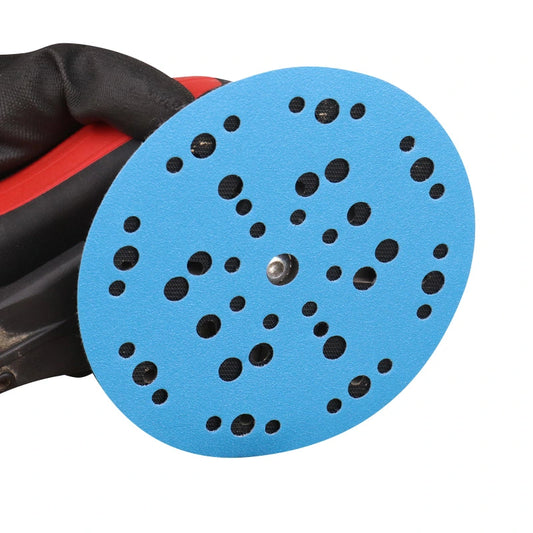
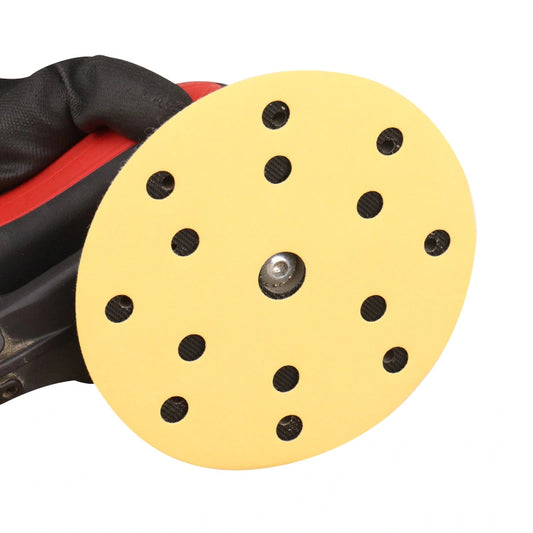
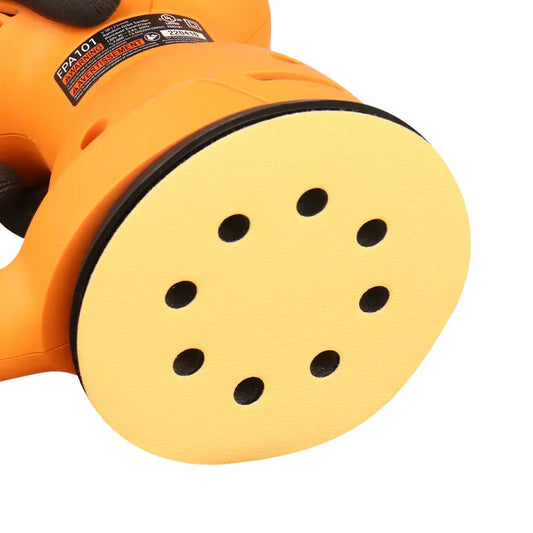
A backing pad is the primary base component that mounts directly onto your orbital sander’s spindle. It is the rigid or semi-rigid foundation for all sanding discs and polishing pads, serving as the direct connection point between your tool and your abrasive accessory. Most backing pads feature a hook-and-loop surface to securely grip sanding discs, and they come with pre-drilled dust holes to match your sander’s dust extraction system.

Backing pads are engineered for stability and support. They are firm by design, available in hard, medium-hard, and standard rigid densities. Their rigid structure prevents flexing during high-speed sanding, which is critical for flattening uneven surfaces, removing material quickly, and maintaining consistent flatness on large workpieces like drywall walls, wooden panels, and metal sheets.
The core job of a backing pad is simple: to hold your sanding disc firmly in place, absorb tool vibration evenly, and transfer consistent pressure across the entire abrasive surface. Without a quality backing pad, discs will shift, vibrate unevenly, and leave inconsistent scratch patterns that ruin your finish.
Best Backing Pad Use Cases
Material removal, flat surface sanding, heavy stock reduction, drywall leveling, rough wood sanding, and industrial metal grinding.
What Is an Interface Pad?
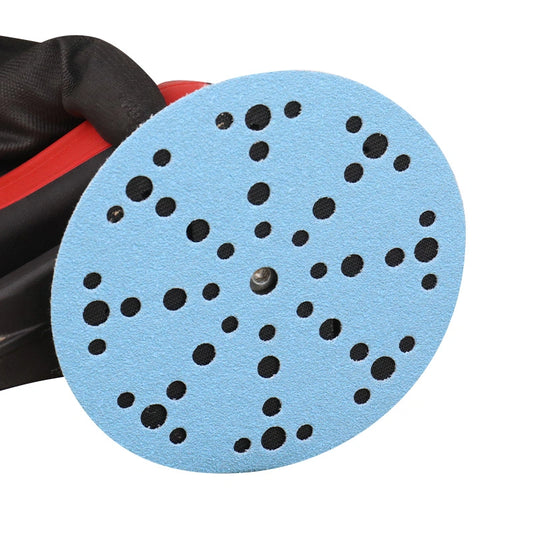
An interface pad (also known as a cushion pad, interlayer pad, or contour pad) is a secondary soft buffer accessory that sits between your rigid backing pad and your sanding disc. Made of flexible open-cell foam, felt, or soft mesh material, it is designed to add a layer of cushioning and flexibility to your sanding setup.
Unlike the rigid backing pad, interface pads are intentionally soft and compressible. Their flexible structure allows the sanding disc to conform to curved surfaces, rounded edges, contours, and uneven textures that a rigid backing pad cannot adapt to. They also disperse concentrated pressure points, eliminating the sharp, localized force that causes swirl marks, micro-scratches, and edge burn-through on delicate surfaces like automotive clear coat and fine wood finishes.
Interface pads are not built for heavy material removal. Instead, they are specialty tools for precision finishing, contour sanding, and defect-free polishing. Many professional detailers and woodworkers rely on interface pads exclusively for final-stage fine sanding to achieve a uniform, glossy surface.
Best Interface Pad Use Cases
Curved surface sanding, automotive fine finishing, epoxy polishing, furniture contour sanding, scratch removal, and feathering paint edges.
Side-by-Side Comparison: Interface Pad vs Backing Pad
| Key Factor | Backing Pad | Interface Pad |
|---|---|---|
| Rigidity & Structure | Rigid, solid core, fixed shape | Soft, compressible, flexible foam/mesh |
| Core Function | Support, stability, heavy material removal | Cushioning, conformity, fine finishing |
| Installation | Mounts directly on sander spindle | Sits between backing pad & sanding disc |
| Sanding Speed | Fast stock removal | Slow, precise finishing |
| Best Surface Type | Flat, large, uneven surfaces | Curved, contoured, delicate surfaces |
| Common Defects Avoided | Wavy surfaces, uneven leveling | Swirl marks, micro-scratches, burn edges |
When to Use Only a Backing Pad
Stick exclusively to a standard backing pad for all rough sanding, leveling, and heavy material removal tasks. Adding an interface pad here will slow down your workflow, reduce cutting efficiency, and fail to level uneven surfaces properly.
Common scenarios for backing pad-only use include: drywall joint compound leveling, removing paint and rust from metal surfaces, rough sanding raw lumber, flattening uneven wood panels, heavy epoxy resin leveling, and prepping large flat wall surfaces for painting. For any job where your main goal is to remove excess material and create a flat base, a rigid backing pad is your best choice.
When to Use an Interface Pad (With Backing Pad)

Always pair your backing pad with an interface pad for all fine finishing, contour, and precision sanding tasks. This combination eliminates the most common sanding defects and delivers professional-grade results.
Key use cases include: automotive clear coat wet sanding and scratch removal, curved furniture and wooden contour finishing, epoxy resin mirror polishing, feathering paint repair edges to avoid visible blend lines, fine drywall finish sanding to eliminate minor texture variations, and restoring delicate surfaces like acrylic, fiberglass, and anodized aluminum. If your goal is a smooth, glossy, defect-free finish, the interface pad is non-negotiable.
Most Common Sanding Mistakes (Pad-Related)
- Using a rigid backing pad for fine finishing: Causes micro-scratches, swirl marks, and clear coat burn-through due to concentrated pressure points.
- Using an interface pad for rough leveling: Excessive flex creates wavy surfaces, uneven material removal, and longer project times.
- Using worn-out interface pads: Flattened, clogged foam creates uneven pressure and inconsistent finishing results.
- Mismatching pad hardness with grit size: Soft pads with coarse grit waste material; hard pads with fine grit leave visible scratches.
Final Verdict: Do You Need Both Pads?
Absolutely. Backing pads and interface pads are not competitors—they are complementary tools that serve entirely separate stages of the sanding process. A rigid backing pad is essential for fast, effective leveling and material removal, while a quality interface pad is mandatory for achieving a flawless, professional finish.
For any workshop, whether for DIY home renovation, automotive detailing, woodworking, or industrial finishing, investing in both a durable backing pad and a premium soft interface pad will eliminate rework, reduce sanding mistakes, and elevate the quality of every project you complete.